Ingredients · 4 min read
Why Does Tía Tô Taste Different from Japanese Shiso When They're the Same Species?
They're both Perilla frutescens, same species. They look almost identical — a leaf with a purple underside and a green top. They smell different. They taste meaningfully different. And nobody has done the comparative chemistry to spell out exactly why.
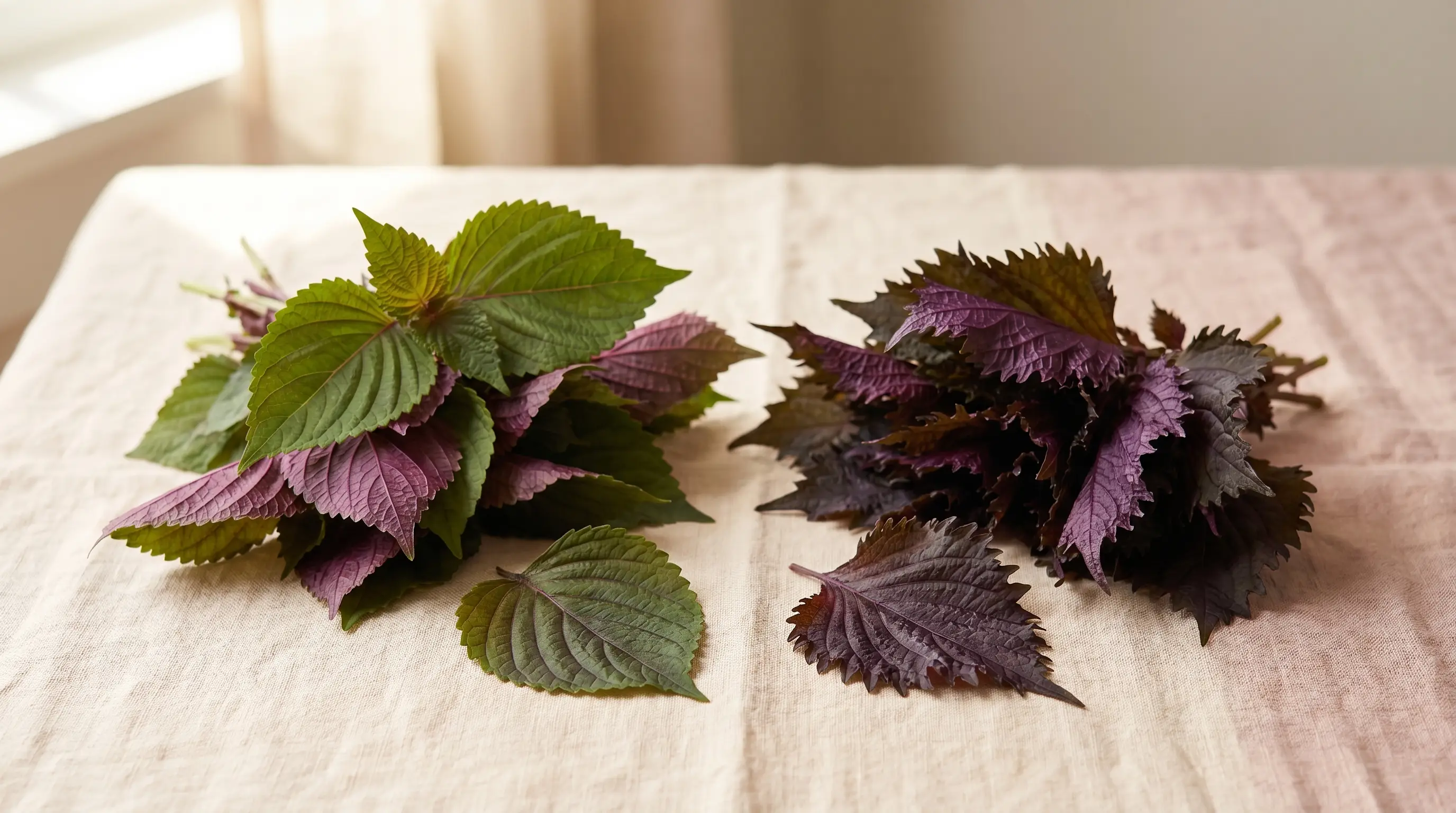
Same species, different cultivars
Plant taxonomy is messy, but the consensus is that Vietnamese tía tô and Japanese shiso are both varieties of Perilla frutescens. They've been selectively bred for different traits over centuries in different regions. The genetic variation between cultivars is small. The phenotype variation — flavor, color, leaf shape — is significant.
Compare it to red and green grapes. Same species, very different wines.
The terpene argument
What we know about perilla flavor chemistry, mostly from Japanese research, is that the distinctive aroma comes from a class of compounds called perillaldehydes plus minor terpenes — limonene, beta-caryophyllene, others. Different cultivars produce these in different ratios.
The published terpene profiles for shiso lean toward perillaldehyde with cumin-citrus notes. The published profiles for tía tô are sparser, but cooks describe a more menthol-anise quality, with some basil-like sweetness. Whether that's a real chemical difference or a perceptual one shaped by what each cuisine uses around it — nobody has done a clean comparative study.
What cooks notice
If you've ever wrapped your bún ốc (snail noodle soup) leaves in shiso, you know it doesn't work. The shiso flavor reads as Japanese — it goes with sushi rice and yuzu, not with shrimp paste and crab broth. Conversely, tía tô next to sashimi reads as off-key.
Vietnamese cooks insist the two are not interchangeable. Japanese cooks tend to agree but use shiso so versatilely that they've never had to choose. Cookbook authors have a harder problem: they're trying to write recipes for kitchens that may only stock one variety.
The substitution guide problem
Most English-language cookbooks say "use shiso if you can't find tía tô, or use Thai basil if you can't find shiso." That's pragmatic, and it produces an edible result, but it's also misleading. Substituting shiso for tía tô in bánh xèo isn't like substituting parsley for cilantro — it's like substituting cilantro for mint. The dish still works. It's not the same dish.
The honest substitution guide would say: "If you don't have tía tô, the dish will be perceptibly different. Here's what to expect."
Why tía tô matters where it matters
Three Vietnamese dishes lean hardest on tía tô specifically:
- Bún ốc — the menthol-anise quality cuts through the funk of snail and shrimp paste in a way no other herb does.
- Bánh xèo — wrapped inside lettuce with the crispy crepe, the tía tô provides the herbal counterweight to the rich pork-and-shrimp filling.
- Phở in some Hanoi-style preparations — though Thai basil is more common in southern phở, tía tô shows up in northern versions.
Outside these dishes, you can substitute and most diners won't notice. Inside these dishes, the substitution is loud.
Why nobody's done the comparative chemistry
Plant chemistry research follows commercial interest. There's a Japanese market for shiso oil and shiso supplements, so Japanese scientists have characterized shiso well. There's no equivalent industrial market for tía tô, so the comparative literature is thin.
This is mostly a research-funding story, not a botanical mystery. Someone will eventually do the work. Until then, take cooks' word for it: same plant, not the same ingredient.
How we source ours
We grow tía tô when we can and source it fresh from regional suppliers when we can't. It shows up on the herb plate next to our pho variants and inside our fresh spring rolls. Try it at Taylorsville or West Jordan and see if you can taste the difference from shiso.