History · 5 min read
Did Pho Come from French Pot-au-Feu, Chinese Ngưu Nhục Phấn, or Neither?
The honest answer is no one knows. Three serious theories survive: the French pot-au-feu theory, the Chinese ngưu nhục phấn theory, and the Vietnamese-improvisation theory. They all have evidence. None is provable. Andrea Nguyen, the leading English-language authority on Vietnamese food, says certainty here is a fool's errand — and she's right.
The French theory: pot-au-feu, phonetics, and beef
The simplest claim is the loudest. The Vietnamese word phở sounds like feu — French for "fire" — and pot-au-feu is a slow-simmered beef-and-bone broth that ate up Sunday afternoons in 19th-century French homes. When the French colonized Vietnam, they brought beef-eating with them. Northern Vietnamese cuisine before that was largely a buffalo-and-pork affair. Beef bones in volume only really arrived with French butcher shops.
The phonetic argument is fragile. The technique argument is stronger. Charring aromatics, skimming foam, simmering for hours — pot-au-feu does all of that. So does pho.
The Chinese theory: noodles, vendors, and ngưu nhục phấn
The competing claim points east. Hanoi at the turn of the 20th century had a sizable Chinese vendor population selling ngưu nhục phấn — a rice-noodle beef broth that pre-dates anything called pho. The rice noodles, the bone-stock base, the cinnamon-and-anise spice profile, even the street-cart format all map onto pho with uncomfortable precision.
Where this theory wavers is on the details. Cantonese beef-noodle soup tends toward stronger soy and five-spice. Pho's herb basket — Thai basil, sawtooth, ngo gai — has no real Chinese equivalent. Something happened between the cart and the bowl that's distinctly Vietnamese.
The "neither" camp: Vietnamese improvisation
A third reading says we're over-attributing. Vietnamese cooks in Nam Định province (about an hour south of Hanoi) had every ingredient on hand — rice noodles from regional rice culture, beef bones from new French butcher demand, native herbs, and a habit of constructing soups in the bowl. Put those elements together and pho falls out almost inevitably, with or without imported templates.
This theory leans on the absence of evidence rather than its presence, which is honest but unsatisfying.
Where the experts land
Andrea Nguyen, in The Pho Cookbook, treats pho as a hybrid that emerged in early 20th-century northern Vietnam under both Chinese and French culinary influence — and never tries to assign percentages. Food historian Erica Peters takes a similar position. Vietnam's own scholarship, when it exists in English translation, sometimes leans Chinese, sometimes leans nativist, sometimes splits the difference.
The reason nobody can settle it is that the dish only became widely documented in the 1930s, by which point it had been mutating for decades. There are no Nam Định pho recipes from 1900. There is no founding pho cook.
Why this debate keeps surfacing
Origin stories are political. The French theory flatters Western palates. The Chinese theory unsettles Vietnamese nationalists. The "Vietnamese improvisation" theory flatters everyone in Vietnam. None of them is being argued in good faith all the way down.
The right move, when you're asked, is to name the three theories and admit the historical record is thin. That's also the most interesting answer.
How this shows up in our broth
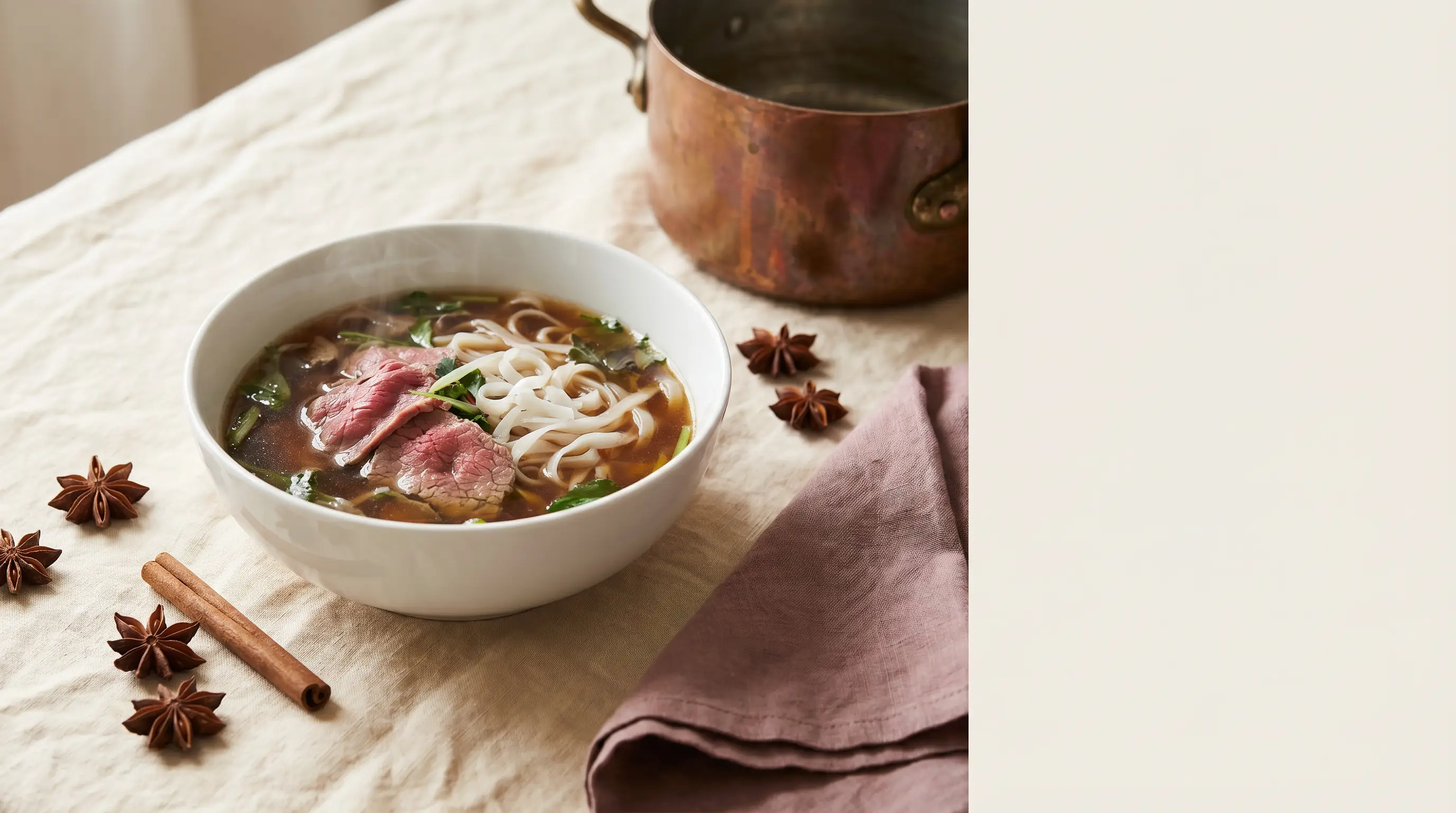
We make our pho the way the consensus modern recipe demands: beef and oxtail bones, charred ginger and onion over open flame, a sachet of toasted star anise, cassia, clove, cardamom, coriander seed, and fennel. Twelve hours at a slow simmer, never a hard boil. Phu Quoc fish sauce and rock sugar at the end.
Is the charring a Franco-Viet inheritance? Maybe. Are the spices a Chinese inheritance? Probably. Is the herb basket and the noodle texture Vietnamese? Definitely. The broth doesn't care about its own ancestry.
Come taste it at our Taylorsville or West Jordan kitchen. See all twenty-two pho variants, including our notes on the broth.